
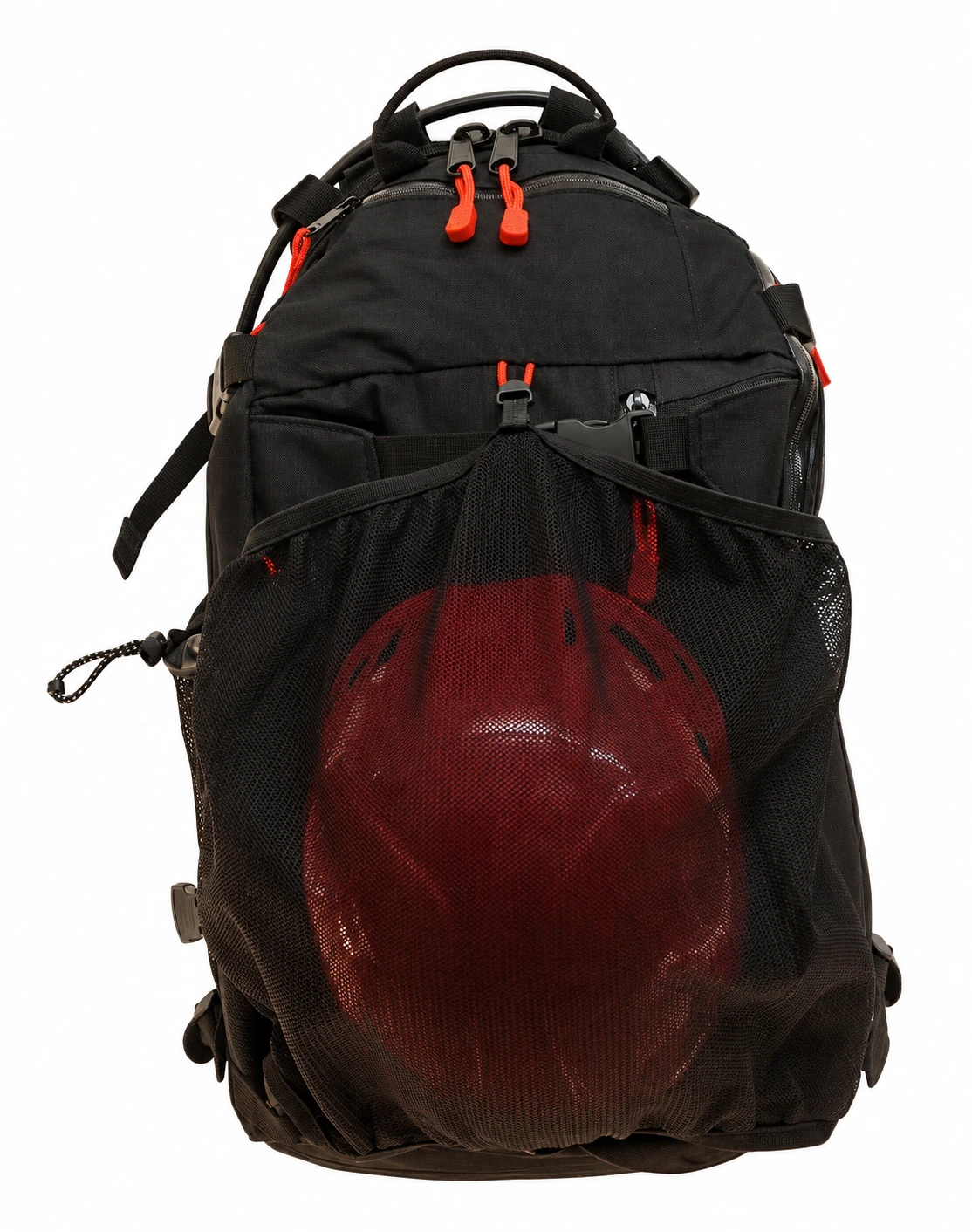
Develop helmet nets around shell shape, opening coverage and pack projection. Separate helmet containment from side-pocket storage and verify the complete interface.
Photo: H. Knoflach · Source · Copyrighted free use. Ordinary product branding/background cleaned with AI; visible structure reference only.
01
External helmet carry changes the pack envelope
On approaches where a helmet must travel with the pack, an external net can reserve main-compartment space. The design problem is to contain a curved, irregular object in a defined position. Covering a helmet is only one part of that task: lower support, opening coverage, anchor placement and projection from the pack need to work together.
The first reference photograph shows a red helmet inside a black front net, with an upper connection area visible. It documents an external product, not a JKPD project or retention test. The photograph does not identify mesh composition, stretch, load capacity or every concealed attachment.
02
Specify the shell shape and its projections
Begin development with the intended helmets rather than a label such as universal helmet pocket. A projecting peak, rear adjustment feature and loose straps can affect insertion, closing and removal differently. A shared circumference does not establish compatibility between different shapes. Record the loading orientation and the parts that must remain inside the opening.
The pack body matters too. Filling the main compartment changes the front-panel shape and the space available between the net and its anchors. Review the intended arrangement with both an empty pack and representative contents. A static product photograph cannot establish how the combination behaves during movement.
03
Separate upper restraint from lower support
The lower region needs to contain the object while the upper region limits outward rotation. Tightening one strap does not replace a review of the whole holding envelope. An edge pressing against the middle of a smooth curved shell may still allow the object to pivot. Observe where that edge sits relative to the shell's widest region, including when the helmet shifts sideways.
Anchors must also leave the main opening, quick-access storage and handle usable. More attachments create more release steps and loose ends to manage. This is a development discussion, not an installation procedure: the actual product's own instructions remain the reference for its intended use.
04
A side pocket is a useful contrast, not helmet evidence
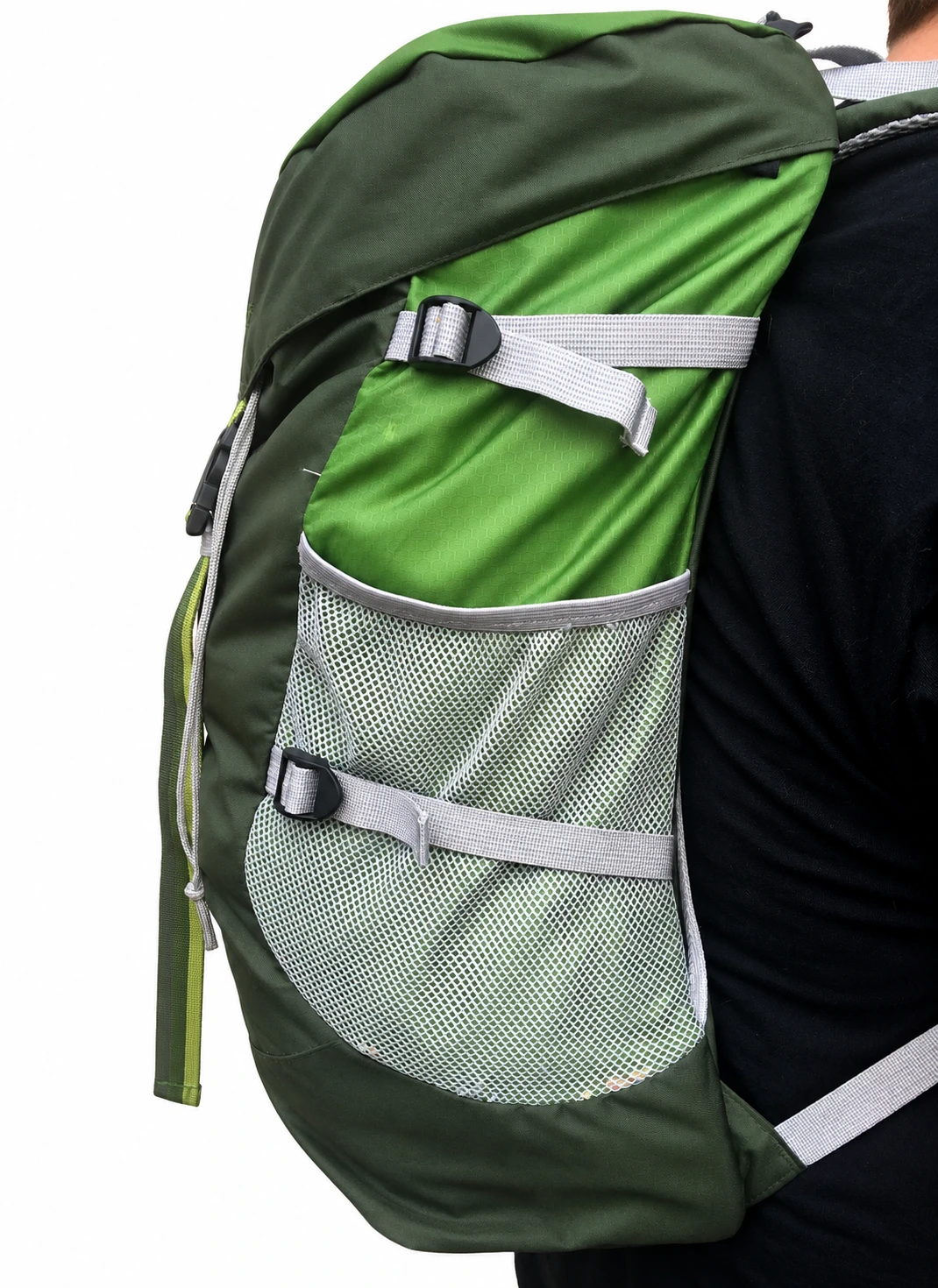
The second photograph shows side mesh storage and transverse webbing. It does not show a helmet and provides no evidence of helmet compatibility. Its role is to contrast a relatively narrow side opening with a front net that wraps around a bulky object. Similar-looking mesh does not give two storage regions the same job.
For a removable helmet net, review the net and pack anchors as one interface. Define webbing fit, connection direction and the state after release. Being able to connect an accessory does not prove a compatible system. Instructions for a different model cannot be transferred to an anonymous reference product.
05
Select the mesh together with its finished edges
Visible openings in a textile do not establish airflow or drying performance for the assembled net. Material selection should include shell contact, edge extension, seam layers and any closure channel. A lighter face fabric may require additional edge reinforcement, so finished weight and folded volume need their own review.
Loose straps and projecting features can also encounter mesh openings. Observe the complete insertion and removal sequence on a sample, including whether tightening concentrates contact along a short edge. These are proposed development observations; no measured results are reported here.
06
Write the brief around the complete handling sequence
Define the target helmet shapes, pack loading state, unused-net storage and handling order. A sample review that includes gloves, insertion, closing, removal and stowing can expose access conflicts that a front view misses. Keep the review specific to the supplied combination rather than presenting a general compatibility guarantee.
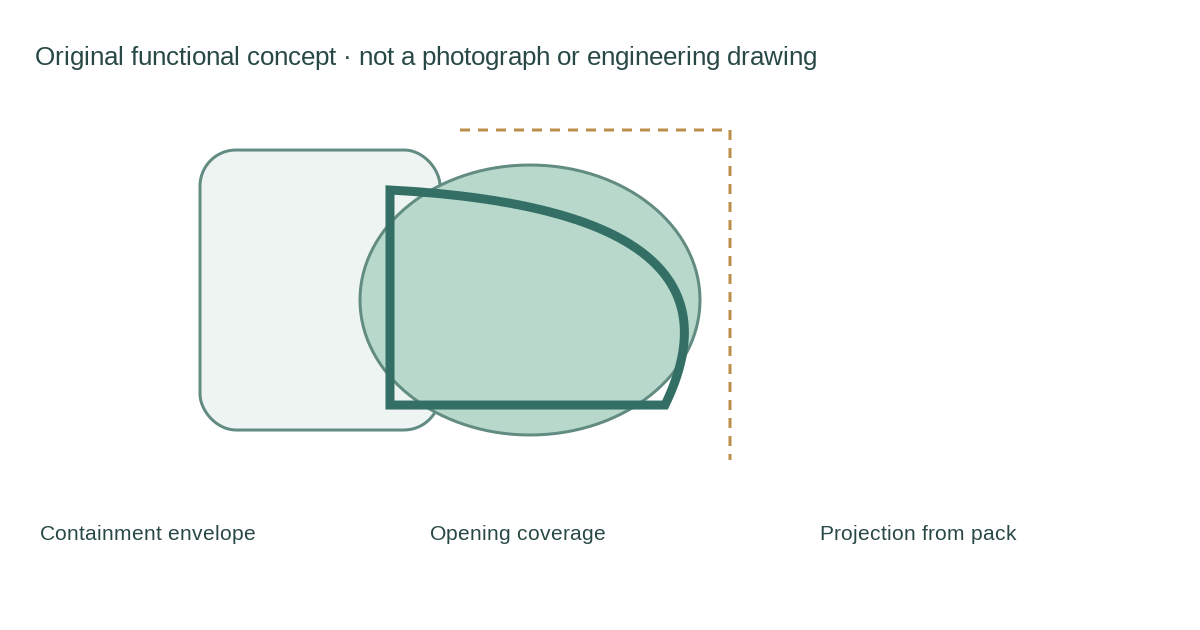
The development handover should identify anchor locations, target objects and sample revisions. The original schematic explains containment and projection only; it is not a confirmed engineering drawing of either photographed product. External storage also does not replace inspection and care of the helmet itself.
Discuss your bag development project
ANSON XIE
General Manager & Founder
Quanzhou Junkai Pengda Special Equipment Co., Ltd.
Email: ansonxie@jkpdtime.com
Phone: +86 177 5095 3355
WhatsApp: +86 177 5095 3355
Factory address: Floors 2–4, Building 1, Phase I, Huixin Intelligent Manufacturing Industrial Park, Hui'an County, Quanzhou, Fujian, China