
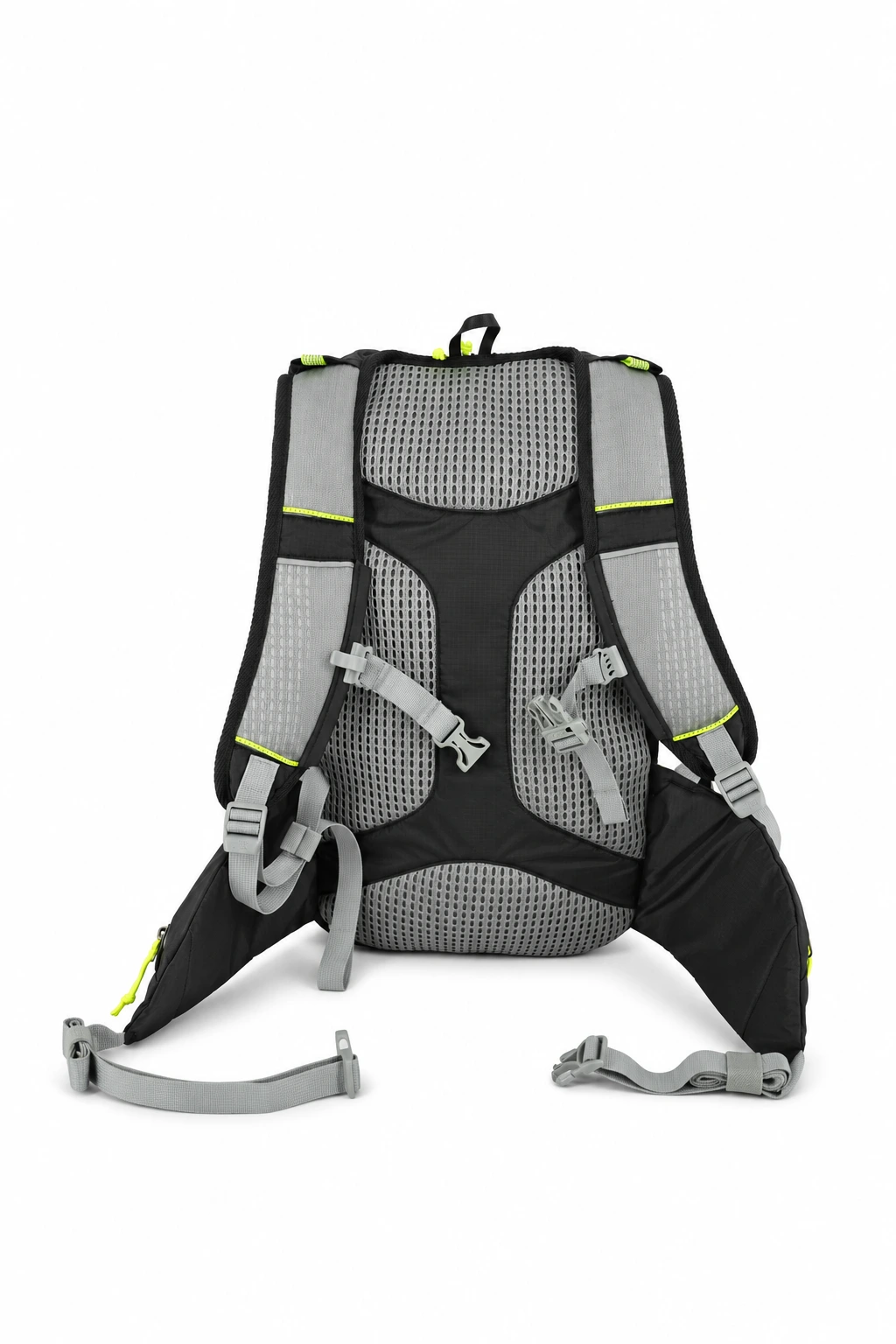
A belt that closes has reached a circumference within its adjustment range. That does not establish where its padding contacts the body. Plan contact coverage first, then check buckle space and webbing travel.
Authorised archive photograph; ordinary branding/background cleaned where present. Visible structure reference only.
01
Read padding and bare webbing separately
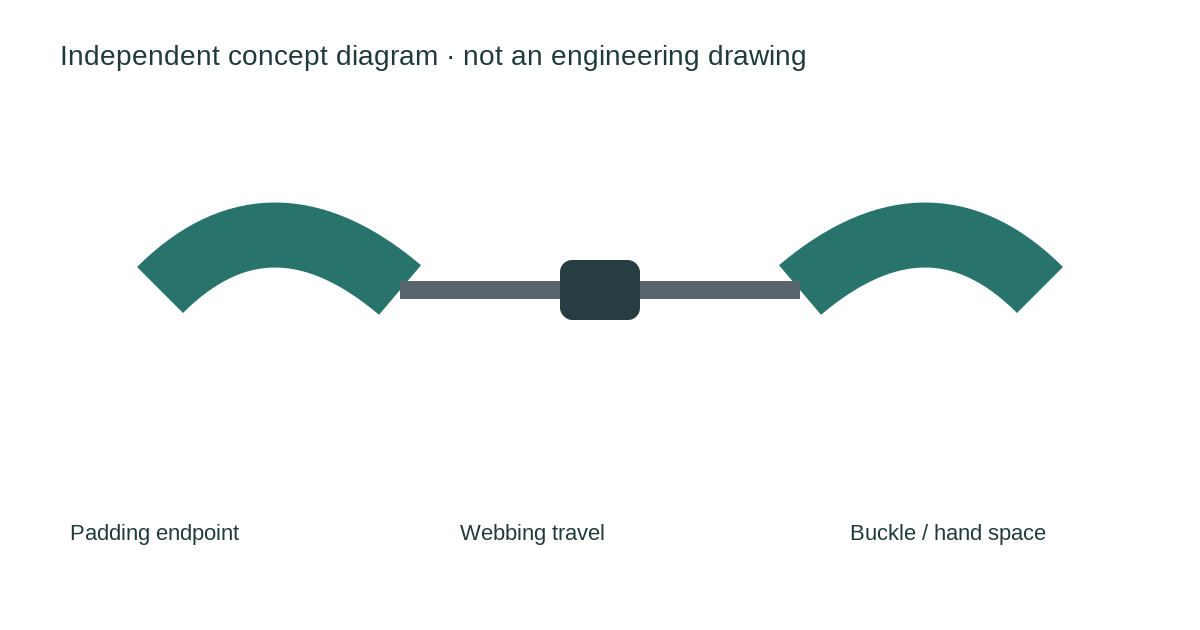
A light hiking pack may use broad padded wings or relatively short padded sections connected by exposed webbing around the front. These elements answer different questions. The shaped contact section establishes where padding is present; the webbing provides closure and adjustment travel. Adding webbing length changes available circumference without automatically moving the padded endpoint forward.
The grey rear view and black belt detail show different visible relationships between wings and webbing. They identify interfaces, not foam grades, load ratings or body-size ranges. The examples are not a combined specification for one product.
02
Short coverage and a crowded buckle are different faults
If the padded section ends too far back, tightening the closure can leave bare webbing as the main contact around the front. Shortening the free tail makes the closure tighter without changing that endpoint. Review wing length, curvature and how the connection lets the wing wrap around the intended contact zone.
The opposite problem occurs when the wing ends crowd the buckle. Effective tightening travel can run out even though the belt looks generously padded. Review the belt size or wing layout rather than asking for a longer loose tail. Space beside the buckle serves both adjustment and the fingers that must release, reconnect and grasp the webbing.
03
Clothing changes the contact map
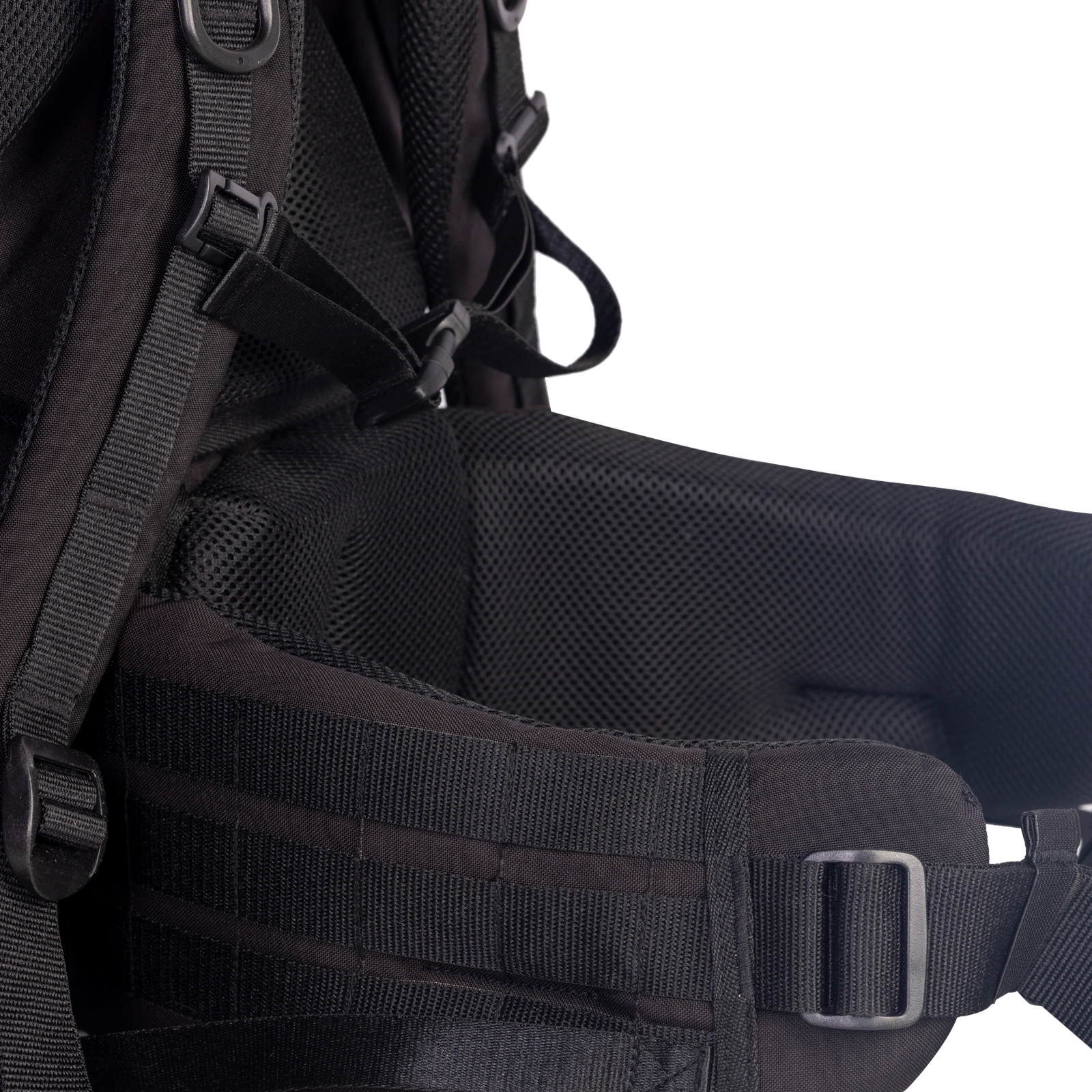
A thin shirt and an insulating layer present different outside contours. More clothing does not simply require letting out the same length of webbing. Bound edges, pockets and wing transitions can move relative to the body. Record the clothing state and compare padded endpoints under the same loading conditions instead of retaining only a circumference measurement.
Sitting, bending and lifting a leg also change the space available between the abdomen and hips. Observe whether an edge folds markedly or the buckle needs repositioning for the planned activity. A short fitting supports observations in that state; it is not evidence of prolonged comfort.
04
Lightweight design begins with the area to cover
Thinning padding can reduce bulk while changing how an edge bends near hardware. More thickness is not an automatic remedy either: padding in the wrong position still ends in the wrong place. Define the required contact area before selecting contact textiles, local support and edge finishes.
Visible mesh does not establish airflow, recovery or water uptake. Retain identified layer samples in the supplier discussion. Public product language should describe supported functions rather than turn an open-looking textile into a breathability guarantee.
05
Plan pocket location with the wrap
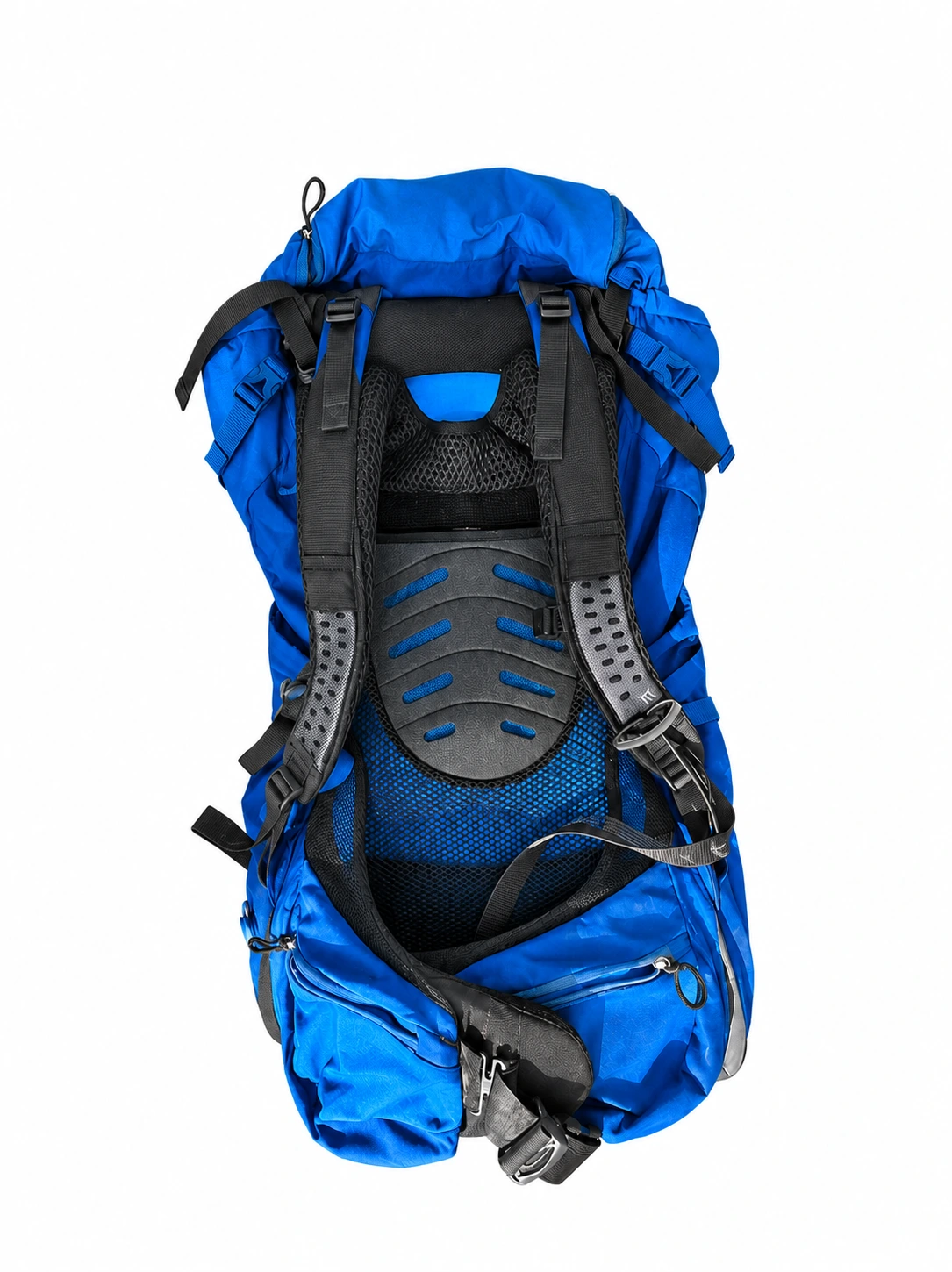
A belt pocket curves with its supporting wing. A longer wing can bring the opening forward, but may also move it into arm movement or buckle operating space. Extending only the bare webbing does not necessarily relocate the pocket in the same way. Dimension its position from the padded endpoint and buckle separately.
The blue example shows a belt with a zipped pocket, illustrating the shared space rather than compatibility with a particular device. Place the intended phone or small item inside before observing bending and release. Storage and body coverage should be reviewed together.
06
Give the supplier a contact-position brief
Show the wing endpoint, intended contact area, buckle and usable webbing segment. State clothing and loading conditions. Record three observations: the closure reaches, the padding covers its intended area, and the hand can operate the hardware. A general impression of tightness cannot replace those separate answers.
When a sample needs revision, identify the edge or interface that should move. Then decide whether to change size, wing shape or webbing route. This keeps belt development tied to the body–product relationship rather than a repeated request for thicker foam.
Discuss your bag development project
ANSON XIE
General Manager & Founder
Quanzhou Junkai Pengda Special Equipment Co., Ltd.
Email: ansonxie@jkpdtime.com
Phone: +86 177 5095 3355
WhatsApp: +86 177 5095 3355
Factory address: Floors 2–4, Building 1, Phase I, Huixin Intelligent Manufacturing Industrial Park, Hui'an County, Quanzhou, Fujian, China