
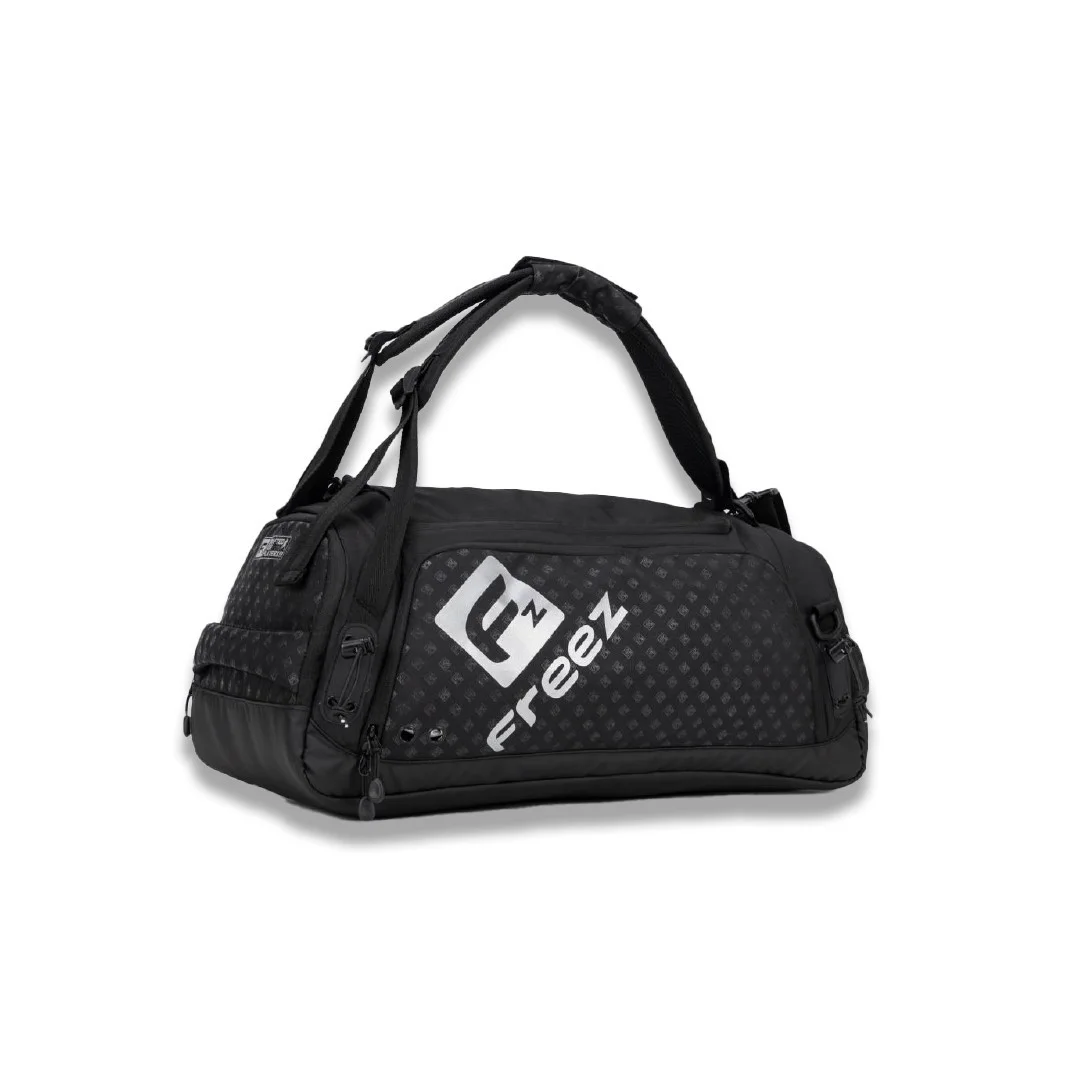
Start gym bag development with the equipment the user actually carries. A packing list gives a product team a useful basis for deciding dimensions, access and compartment layout. It also helps prevent a familiar problem: a bag with many pockets but insufficient space for its main contents.
01
Define the trip before choosing capacity
An after-work gym visit and a weekend sports trip can require different loads. Specify whether users also carry a laptop, spare shoes, toiletries or extra clothing. Record whether they usually carry the bag by hand or on one shoulder.
A target volume alone does not describe usable space. Supply representative items or their dimensions and separate essential items from optional ones. Review each sample with the same load. Check zipper closure, distortion and whether frequently used items can be reached without emptying the main compartment.
02
Review the shoe compartment with the bag packed
A separate shoe section can help organize the load, but a flexible compartment may extend into the main storage area when filled. Evaluate shoes and clothing together rather than approving the layout from an empty sample.
Specify the largest shoe dimensions, opening direction and cleaning requirements. If ventilation is requested, consider possible routes for dust or rain to enter. Ventilation, separation and water protection are separate requirements and should be discussed separately.
03
Describe what wet-item storage must do
Water-repellent fabric does not establish that a finished compartment can contain liquid. Define whether the requirement is temporary separation of damp clothing, a removable pouch or another construction.
Review the lining, seams, closure and connections to adjacent compartments. Waterproof or leakproof marketing claims require an agreed validation method. For a removable pouch, also check attachment, removal and drying access.
04
Place pockets around the order of use
Phone and key storage should balance quick access with secure retention. Bottle pockets need review with the intended bottle shape, including pocket depth and opening behavior under load.
Walk through a realistic sequence: put the bag down, retrieve a bottle, open the main section, remove shoes, return a phone and lift the bag. Look for blocked openings and difficult zipper access. Each additional pocket also adds components and assembly work, so give every compartment a clear purpose.
05
Assess carrying and base construction together
Handle and shoulder-strap attachment positions affect how a loaded bag hangs. Check hand clearance, shoulder-pad movement and unwanted tilting. Discuss reinforcement with the material and sewing construction rather than specifying a stitch pattern in isolation.
Base reinforcement or an easy-clean panel may suit the use case, but additions also affect weight, folding and assembly. Review these trade-offs before freezing the appearance.
06
Prepare a sample brief that supports decisions
Include the target user and market, item dimensions, compartment priorities, maximum intended load, carrying method, material direction, branding positions and commercial constraints.
Use the first sample to review packing and access. Once the layout is stable, confirm materials, colors and details. Mark changes on photographs and record sample versions so the next review has a clear reference.
To discuss a development starting point, share a packing list and your functional priorities through the JKPD project inquiry page. Construction, performance and production conditions should be confirmed for the individual project.
Discuss your bag development project
ANSON XIE
General Manager & Founder
Quanzhou Junkai Pengda Special Equipment Co., Ltd.
Email: ansonxie@jkpdtime.com
Phone: +86 177 5095 3355
WhatsApp: +86 177 5095 3355
Factory address: Floors 2–4, Building 1, Phase I, Huixin Intelligent Manufacturing Industrial Park, Hui'an County, Quanzhou, Fujian, China