
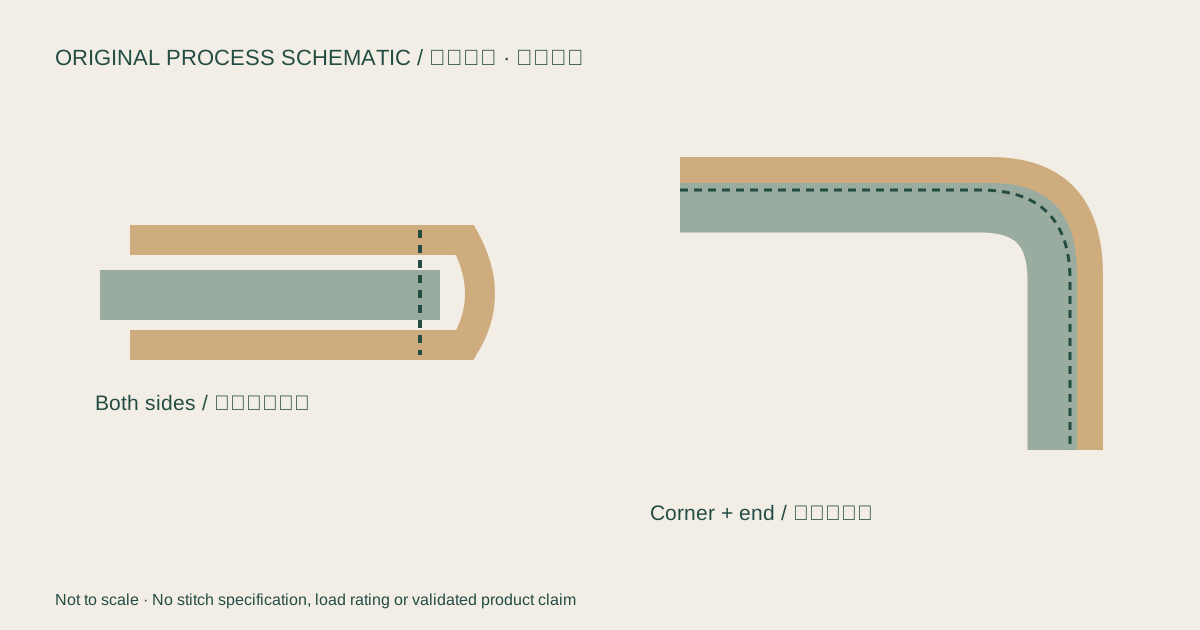
Assess interior binding through edge coverage, stitching on both sides, corners and end finishes. An exterior opening view can miss work deep inside a compartment or behind a divider. Checkable interior requirements give buyers and sampling teams a clearer reference.
01
Map the edges to be finished
Mark main-compartment seams, divider edges, opening areas and other relevant locations. Distinguish binding from other edge finishes instead of assuming every internal edge uses the same method.
American & Efird's seam reference identifies binding as a seam category. A development brief still needs the particular materials and assembly arrangement; a category name is not a complete construction instruction.
02
Confirm materials and measurement states
Record the binding reference, fold arrangement and whether width is measured unfolded or finished. Review color, thickness and feel alongside adjacent materials. A substitute binding sample should not automatically approve the final material.
Identify curved and straight areas. Review the representative stack rather than predicting corner behavior from a material name.
03
Inspect both sides
Open the bag and check coverage of the intended edge and attachment of the required layers. A neat stitch line on one face does not establish that the reverse is fully caught or that the edge is enclosed. Pair a location photograph with a close view so the next review can find the same area.
Photograph thickness changes separately, including divider joins, reinforcing pieces and layer intersections. Record visible differences and discuss adjustments without inferring strength from appearance.
04
Treat corners and ends as separate items
Look for unwanted gathering, bulk or protrusions around curves and corners. Specify starting and ending positions and the intended end finish. Check whether ends interfere with packing and retrieval using the intended equipment.
The section and corner schematic identifies review locations. It does not prescribe stitch spacing, density, binding width or universal process settings, and it is not a validated product construction.
05
Make the interior visible in approval records
When photographs do not reveal the detail, add an opened swatch or corresponding interior view. Separate shape reviews from checks requiring physical handling. Agree acceptance conditions for the use case rather than treating tidy appearance as complete approval.
Retain sample revision, material references, inspection locations, end-finish notes and open issues. Recheck adjacent binding after a thickness or interior-layout change.
Share interior drawings, intended contents and marked edge locations through the JKPD inquiry page to discuss an equipment case or sports bag sample.
Discuss your bag development project
ANSON XIE
General Manager & Founder
Quanzhou Junkai Pengda Special Equipment Co., Ltd.
Email: ansonxie@jkpdtime.com
Phone: +86 177 5095 3355
WhatsApp: +86 177 5095 3355
Factory address: Floors 2–4, Building 1, Phase I, Huixin Intelligent Manufacturing Industrial Park, Hui'an County, Quanzhou, Fujian, China