
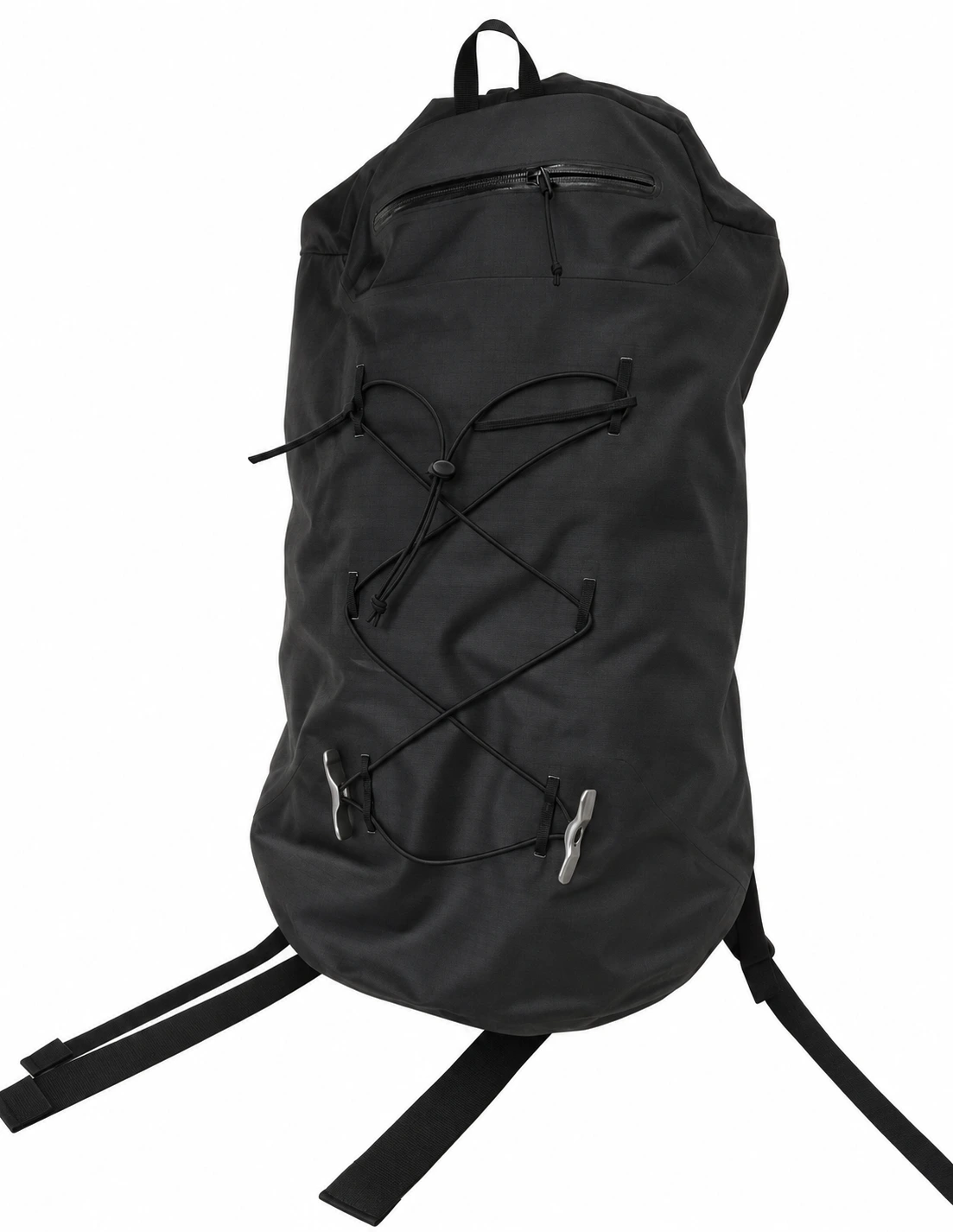
Separate lower tool loops, upper restraint and front lacing when developing alpine packs. Review the full object, handling sequence and front-pocket clearance.
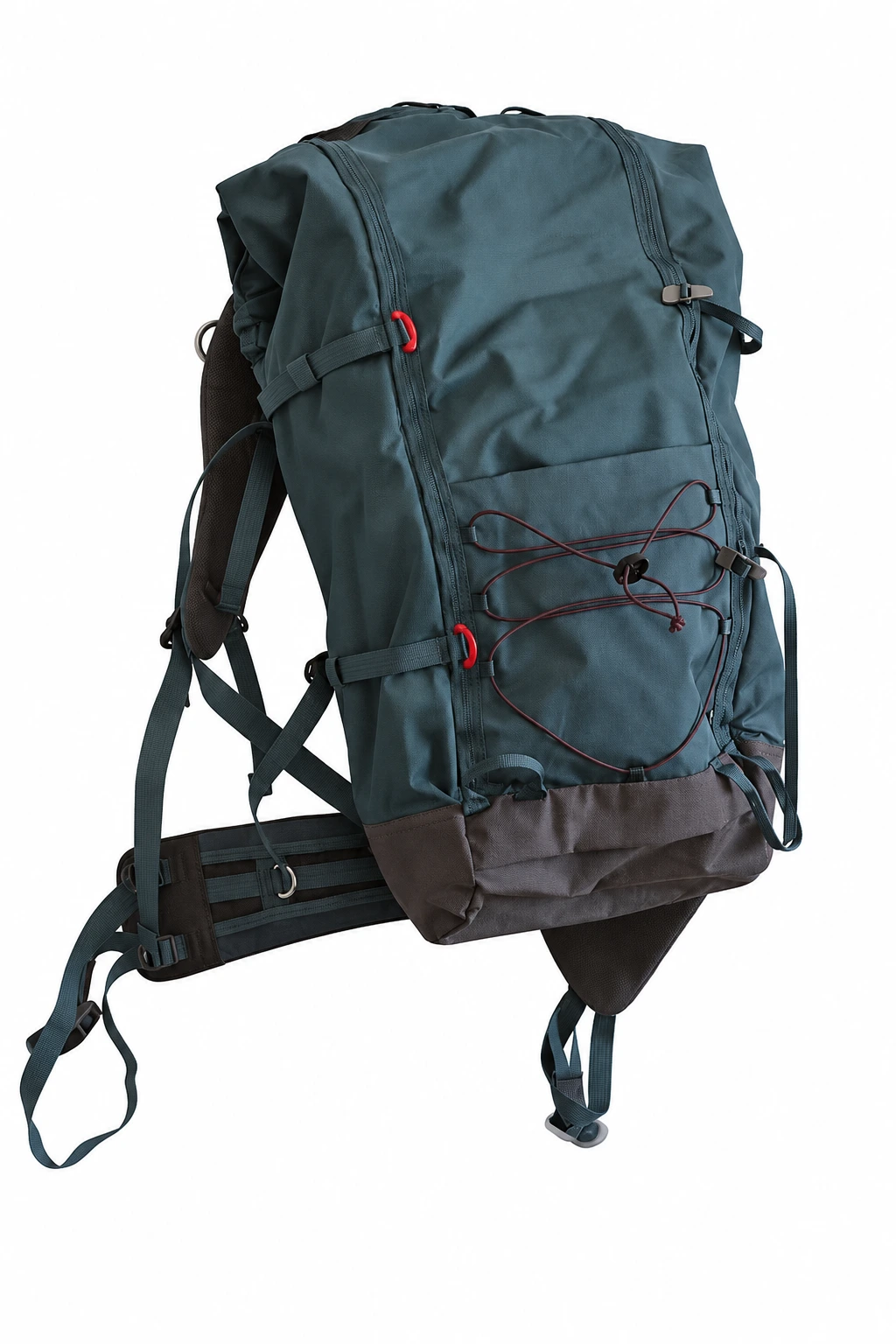
Photo: Jjanhone · Source · CC BY-SA 4.0. Ordinary product branding/background cleaned with AI; visible structure reference only. Adaptation under the same license.
01
Identify the interfaces before assigning a carrying task
An alpine pack front can combine lower loops, an upper attachment area and crossed cord. All appear capable of holding something, but containment, restraint and gathering are different jobs. Calling every component a universal gear attachment can produce an attractive sample without a clear handling method.
The first photograph shows two pale loop-like components near the bottom of a black pack and crossed cord on its face. No tool is installed. The photograph cannot establish compatible tool types or retention performance. This article explains how to define a development interface; it is not an operating guide for the pictured pack.
02
Locate lower support and upper restraint together
For an elongated object that needs restraint at two regions, start with the actual object and its manufacturer's intended carrying arrangement. A lower loop accepting one part does not establish control of the upper end. Tightening an upper connection does not prove that the lower end remains correctly located after disturbance.
Mark both interfaces and the useful space between them in the brief. Consider how a filled pack changes shape and how bends or projecting features affect contact. Aligning two points on a flat pattern is insufficient. The correct installation method must come from the applicable product instructions rather than an anonymous photograph.
03
Give front lacing a separately defined purpose
The second reference shows another pack with crossed cord, side webbing and a front opening line. It supports a discussion of how flexible items can be gathered toward a pack face, but no item is installed. It provides no evidence of tool-carry strength or a load rating.
When the intended range includes both soft clothing and rigid equipment, define separate carrying states. A flexible bundle compresses and rebounds; a rigid object can concentrate contact over a small area. Both may appear to tighten under the same cord while requiring different interface decisions and acceptance criteria.
04
Keep the opening sequence clear
An externally carried object can occupy the zipper path, cord-adjuster region or hand approach. Place the intended object in its proposed position before reviewing front-pocket and main-compartment access. If removal must come first, state that sequence explicitly. An accessible-looking zipper does not mean its contents remain available in every carrying state.
Review both a full and lightly loaded pack. Cord and webbing can settle at different positions as the body changes shape. Look for a route crossing an opening, a pocket face pulled into a fold or a free end entering the grasp area. These operations have not been performed on the photographed products.
05
Keep local attachment construction distinct from shell weight
A lighter front panel still needs defined attachment regions, cord turns and finished edges. Its appearance cannot identify fibre, coating, abrasion resistance or carrying strength. A sourcing brief needs traceable material specifications and local construction information rather than the phrase lightweight and durable alone.
At sample stage, review the unloaded and intended loaded shapes, connection clarity, gloved handling and storage of unused parts. Strength, fatigue and retention performance require their own applicable evidence. No numerical performance claim is made here.
06
Hand over the interface and handling plan together
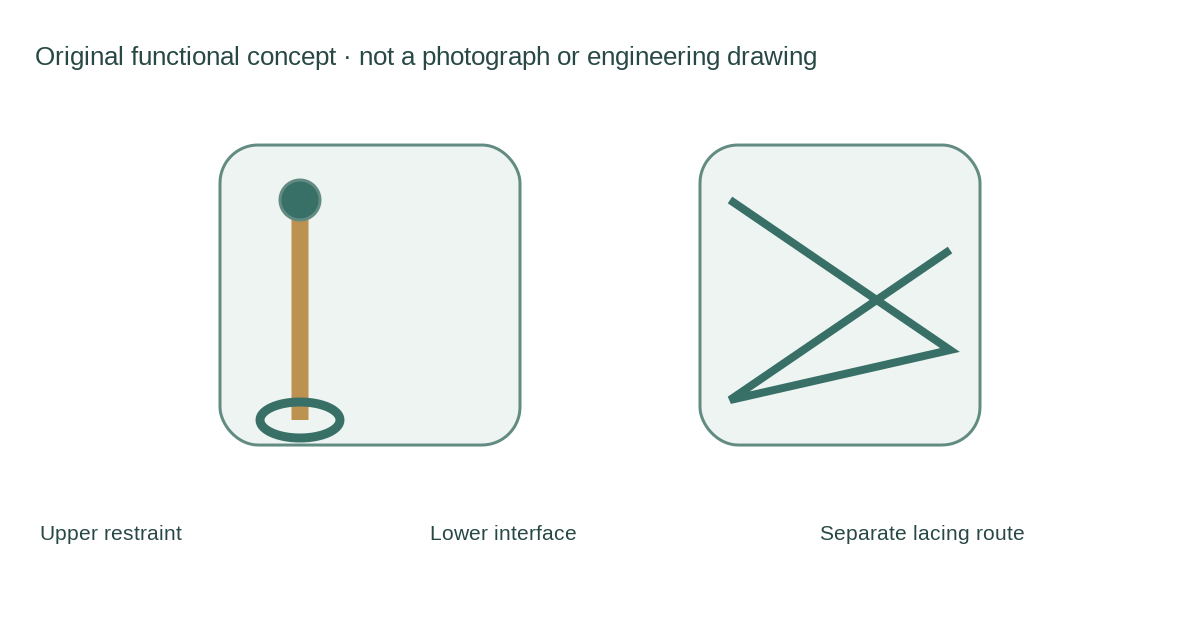
An actionable brief identifies the target objects, carrying orientation, upper and lower locations, pocket-access order and unused state. Photographs document visible reference details; the independent schematic explains the proposed division of tasks. Neither replaces verification of a finished combination.
A new carrying arrangement needs review as a complete assembly. Loops and cord visible on an external product should not be relabelled as a verified universal system. The reference packs do not establish JKPD design ownership, manufacturing history or tested capability.
Discuss your bag development project
ANSON XIE
General Manager & Founder
Quanzhou Junkai Pengda Special Equipment Co., Ltd.
Email: ansonxie@jkpdtime.com
Phone: +86 177 5095 3355
WhatsApp: +86 177 5095 3355
Factory address: Floors 2–4, Building 1, Phase I, Huixin Intelligent Manufacturing Industrial Park, Hui'an County, Quanzhou, Fujian, China